CB Stories
Middleweight Naked Sport Model Powered By Newly Developed Inline-Four Engine
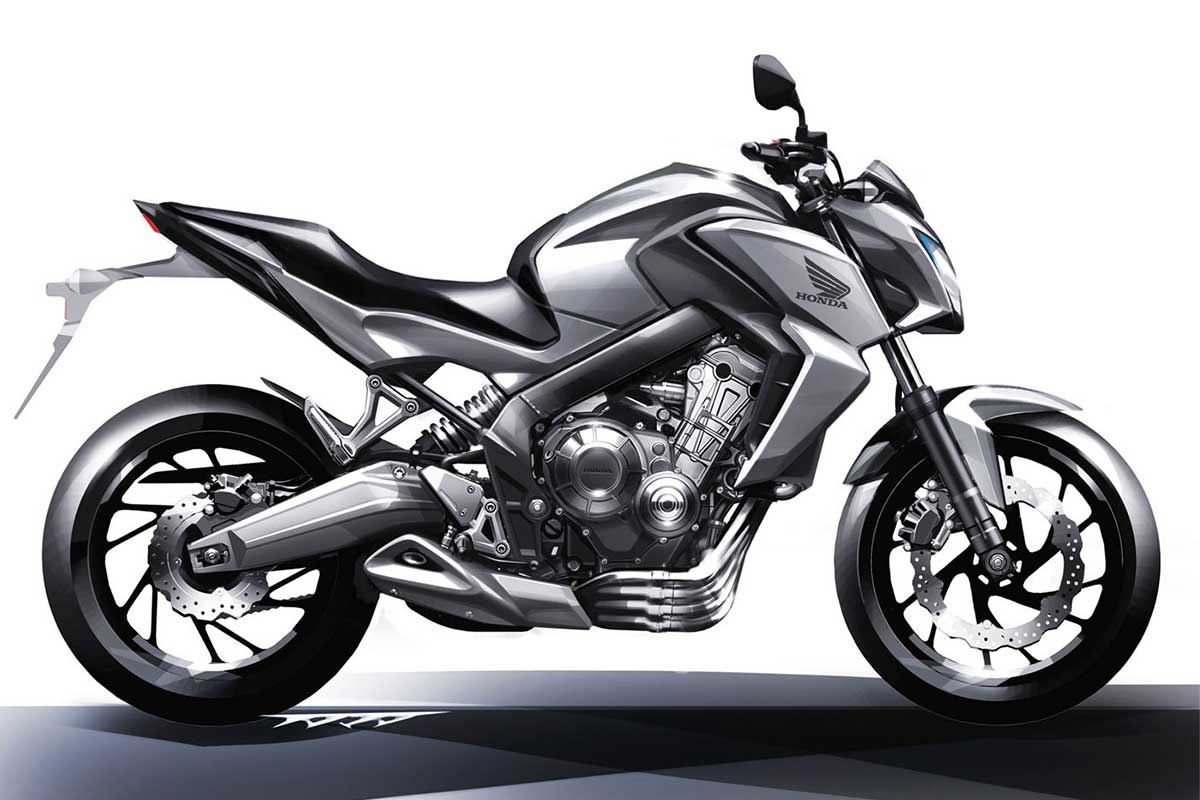
The CB650F was developed as a naked sport model powered by a newly developed inline-four engine.
Following its unveiling at EICMA 2013 (Milan Motorcycle Show) in November 2013, it was also displayed as a planned production model at the 43rd Tokyo Motor Show, attracting considerable attention from motorcycle enthusiasts.
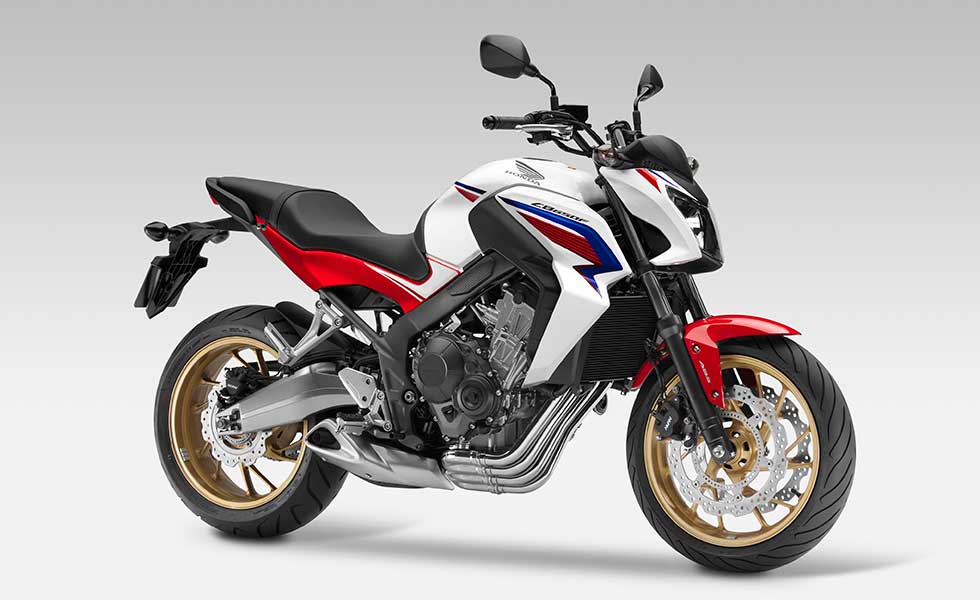
CB650F displayed at EICMA 2013
In November, Honda announced the color lineup for the 2014 model in Europe.
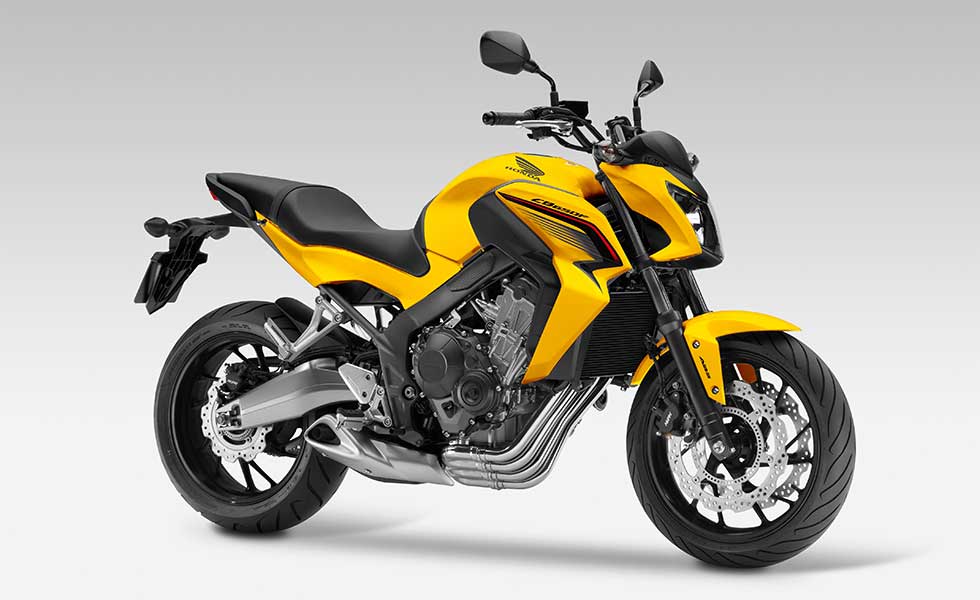
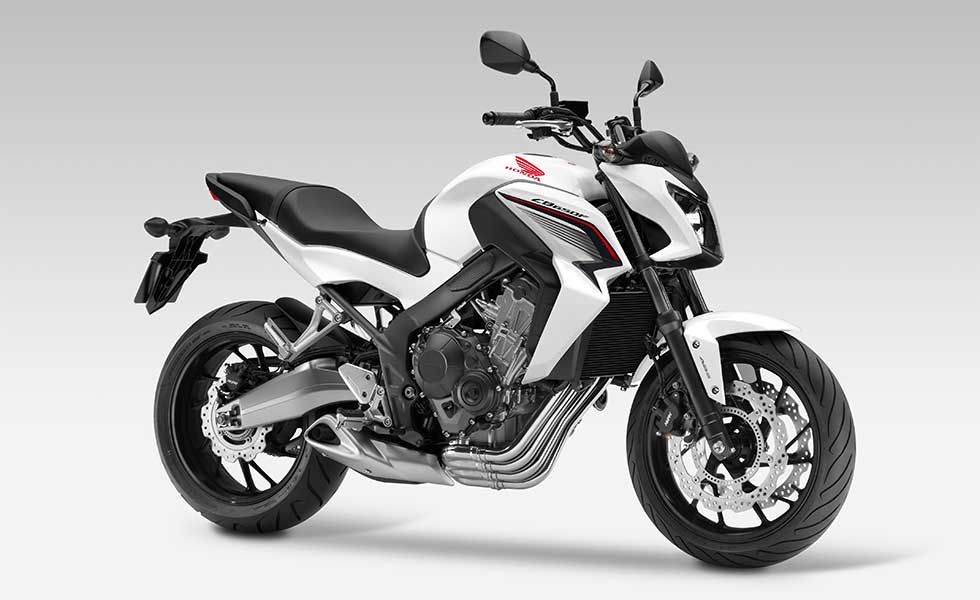
CB650F 2014 European model, announced in November 2013
The CB650F went on sale in Japan in April 2014.
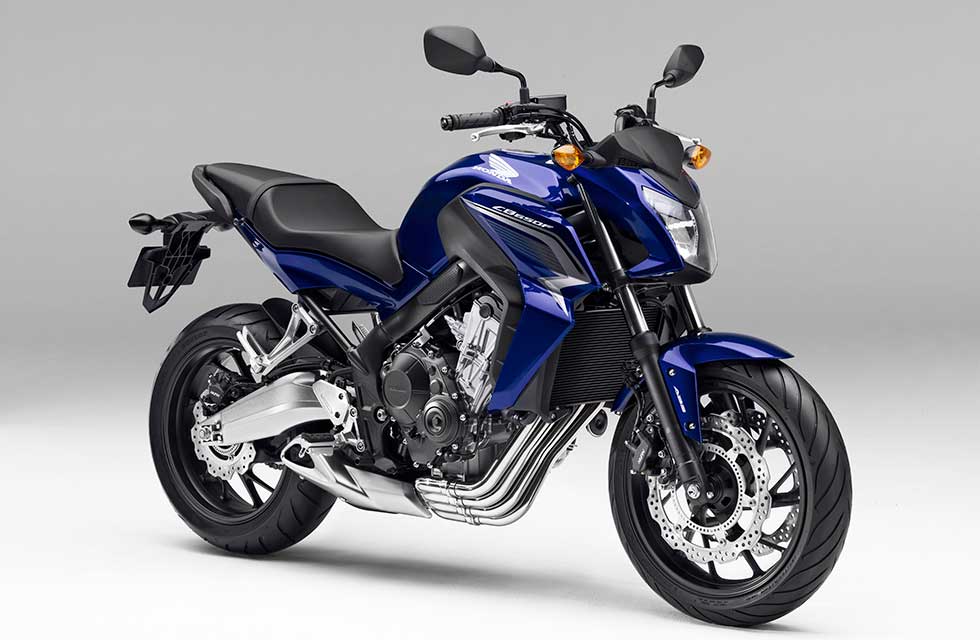
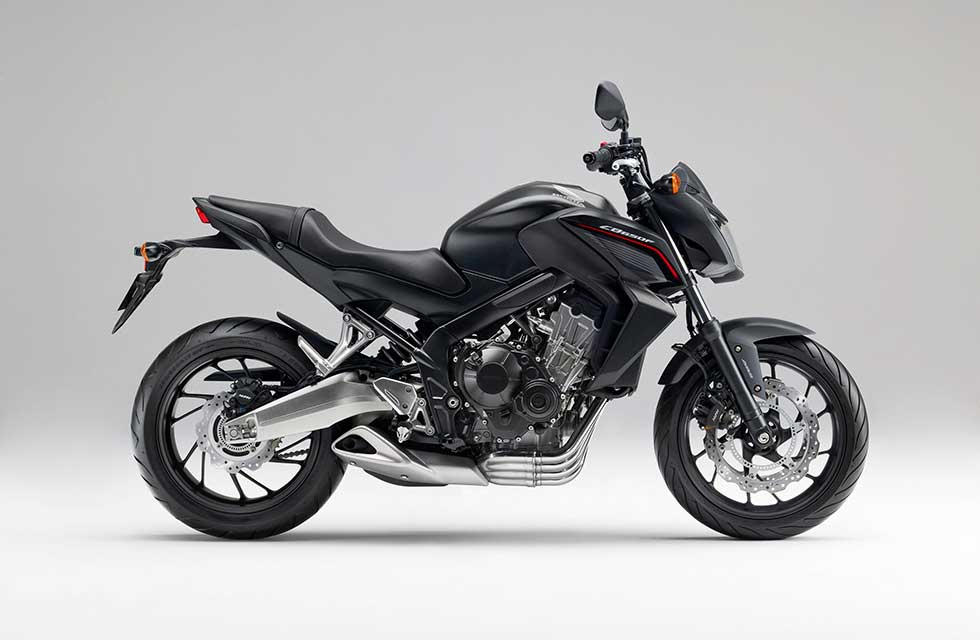
CB650F, launched in April 2014
Development concept
The development team set out to explore two questions: “What do riders expect from a Honda model powered by an inline-four engine?” and “What kind of inline-four engine embodies the world of CB?”
This exploration led to the goal of creating a model that would respond to customer needs and the demands of the times while providing the foundation for the next generation of inline-four CB models.
The development concept was “Welcome to the L4 CB world.”
To offer an appealing middleweight CB to customers around the world, the development team thoroughly pursued the desired riding feel, functionality and design, setting the following targets:
- - A slim, compact motorcycle despite its inline-four engine, providing an enjoyable and reassuring riding experience.
- - Smooth engine characteristics that deliver strong performance at low and midrange rpm and a satisfying, free-revving feel at higher rpm.
- - The ability to ride in top gear even at engine speeds below 4,000rpm.
- - Easy handling at low speeds, including stable steering feel, easy U-turns and good reach to the ground.
Powered by an inline-four engine, one of the traditions carried forward by the CB series, the CB650F aimed to be a naked sport model that could be enjoyed by a broad range of riders, from beginners to experienced riders.
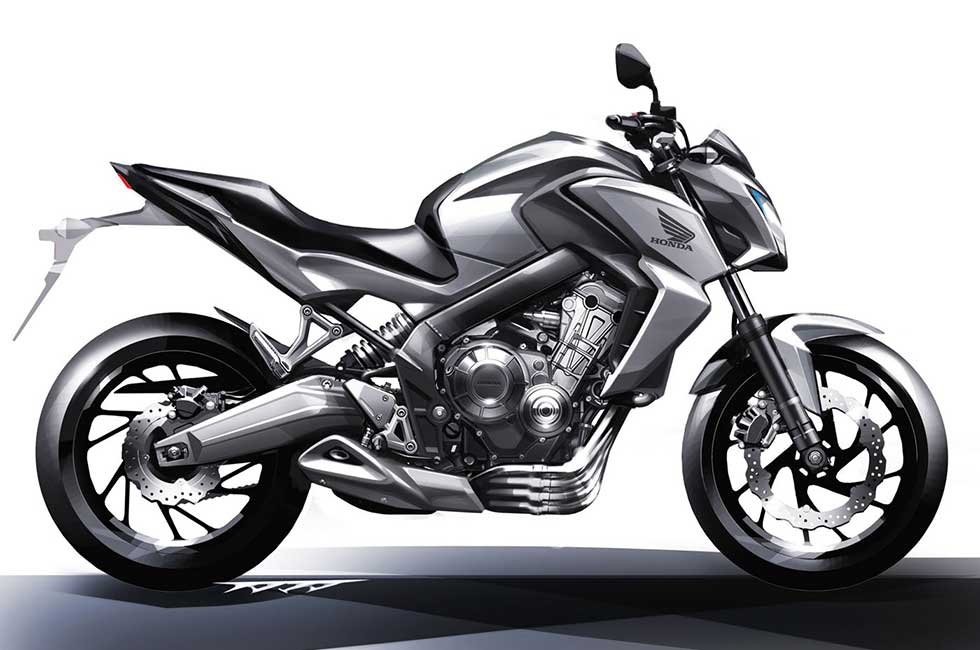
CB650F styling design sketch
[Engine]
The newly developed 650cc liquid-cooled, four-stroke, DOHC, four-valve inline-four engine was designed to be easy to handle at low and midrange rpm while delivering smooth, free-revving performance at higher rpm.
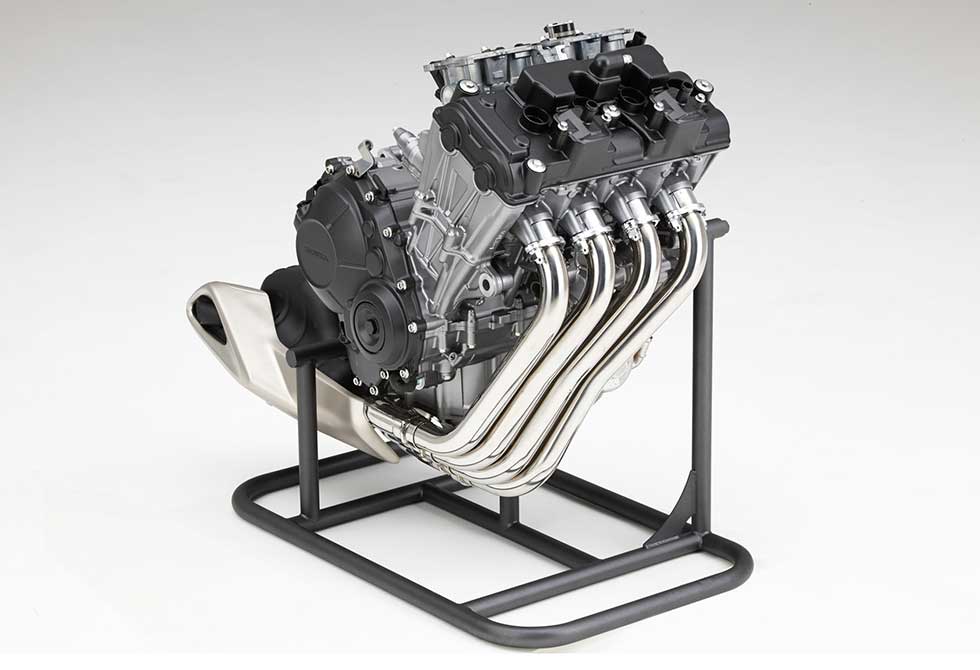
The exterior was given a mechanical, powerful design suggestive of its high performance. The throttle body was made compact by optimizing its mounting angle and the positioning of its sensors.
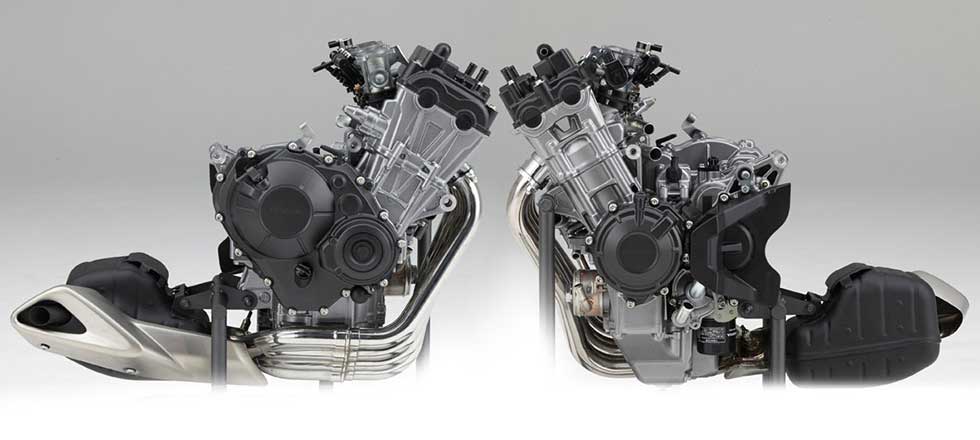
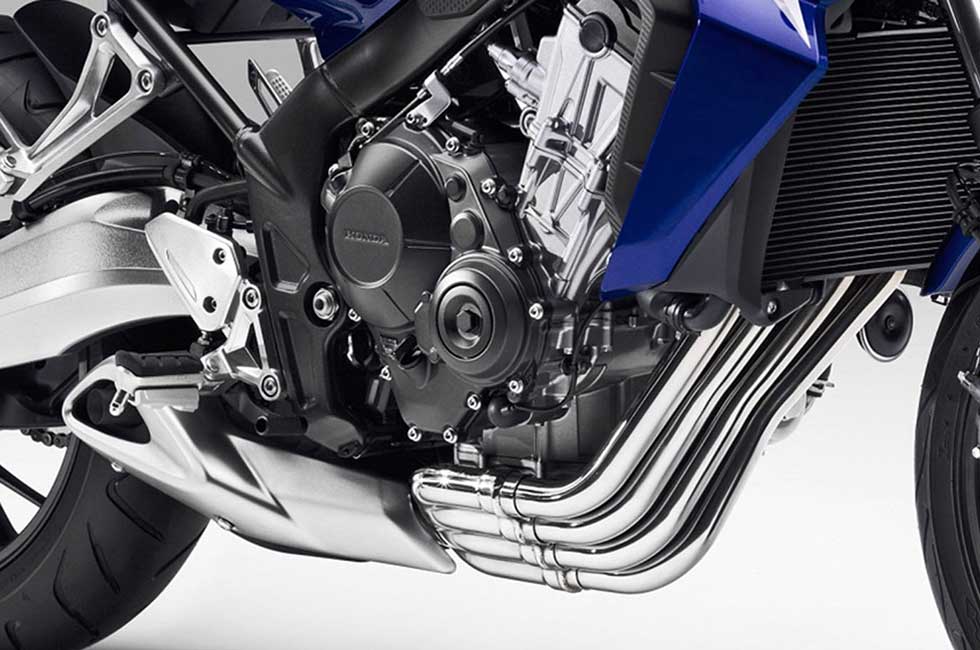
The elegantly curved exhaust pipes were optimized in length to deliver strong torque even at engine speeds below 4,000rpm, resulting in easy-to-manage power characteristics.
A short muffler positioned beneath the center of the motorcycle contributed to mass centralization, while its construction was designed to deliver the exhilarating exhaust note characteristic of an inline-four engine.
[Chassis and suspension]
The frame adopted a newly developed steel twin-tube design with an oval cross-section, combining excellent rigidity with appropriate flexibility to provide agile handling.
Its slim configuration also accommodated the compact engine while making the motorcycle easy to straddle.
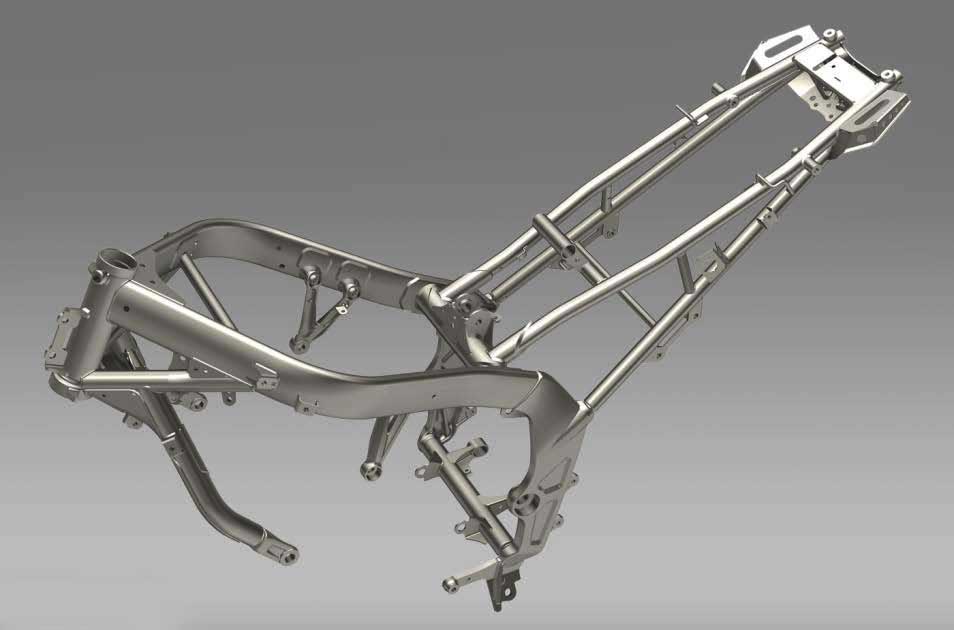
Frame CG
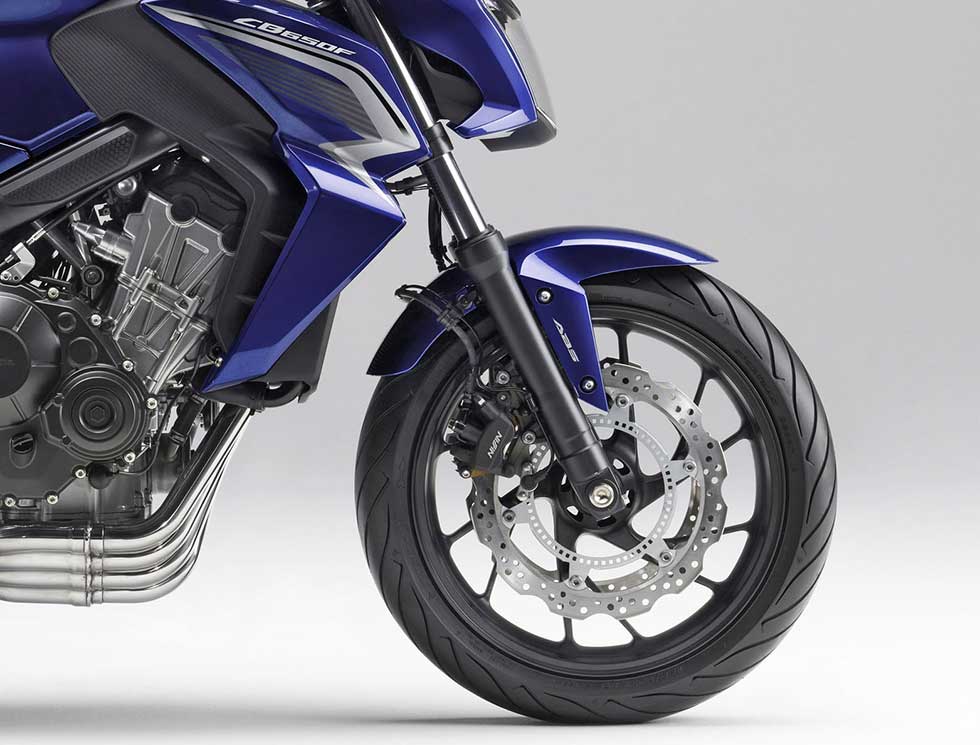
The front suspension featured a conventional telescopic fork with 41mm inner tubes and 120mm of travel. The 17-inch cast aluminum wheels featured a lightweight hollow-section construction and six Y-shaped spokes, contributing both to their sculpted appearance and to agile handling.
Positioning the rear suspension directly beneath the seat made it possible to locate the muffler below the swingarm pivot, contributing to mass centralization.
A seven-step preload adjuster enabled riders to tailor the suspension to their riding preferences or accommodate a passenger.
The rear swingarm used a one-piece aluminum construction, combining high rigidity with appropriate flexibility. Optimizing the rear suspension ratio also contributed to excellent road-holding performance.
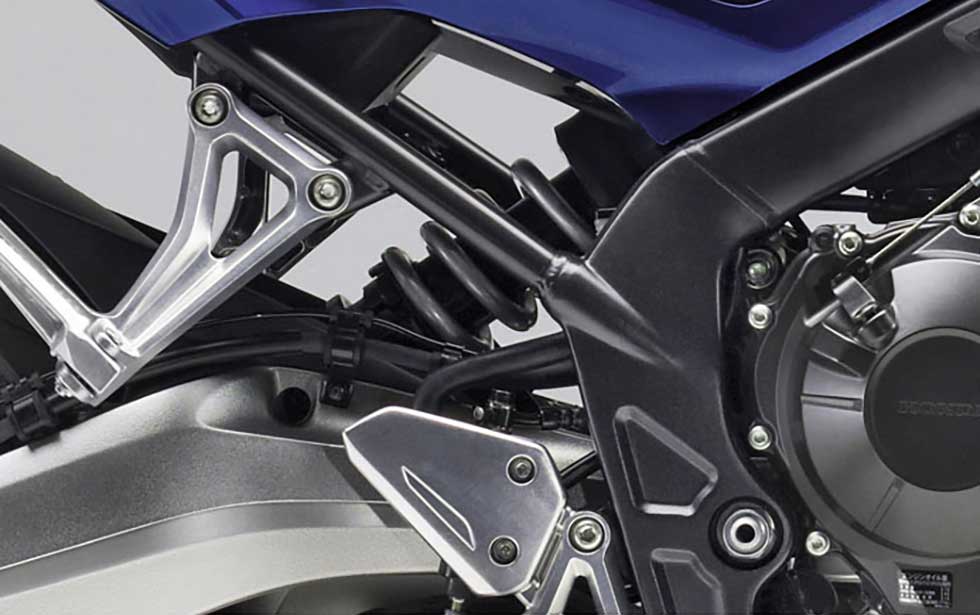
Rear suspension
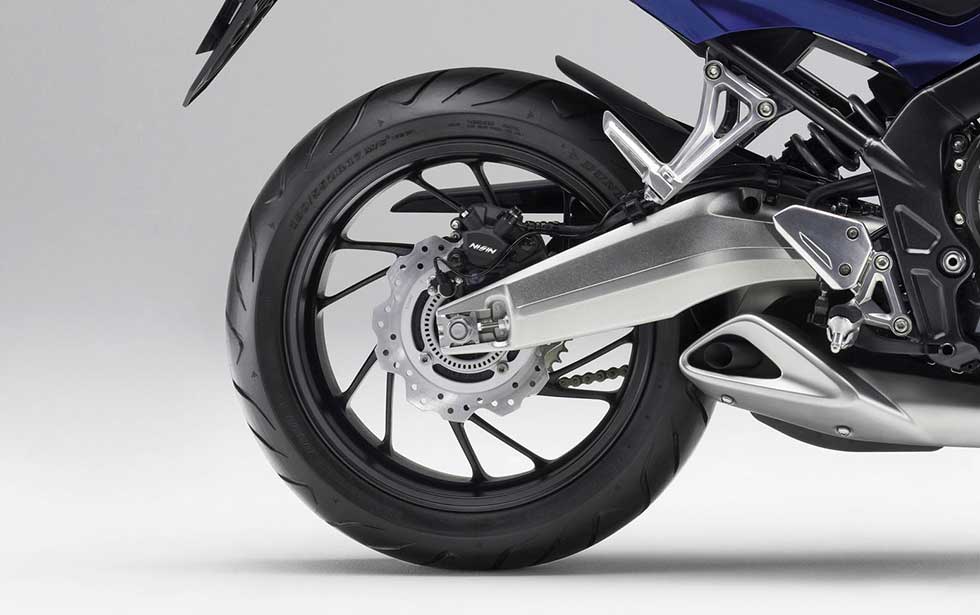
Rear swingarm
[Design]
The ideal styling concept was a form in which the rider and motorcycle appeared as one, and the shapes of the engine, frame, wheels and other components were developed with this in mind.
Honda also pursued a design that people around the world would immediately recognize as a Honda inline-four CB, expressing Honda originality from a global perspective.
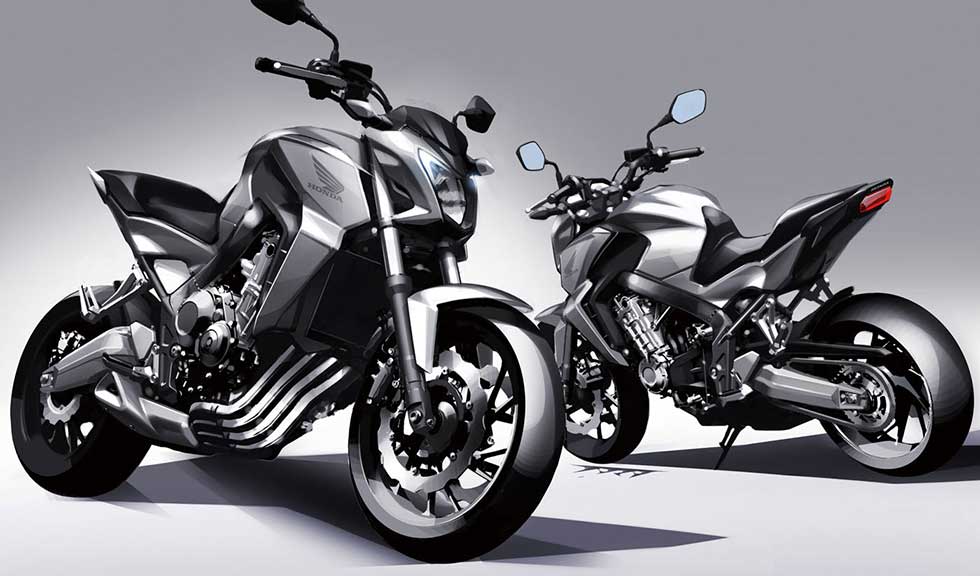
CB650F styling design sketch
The front fascia emphasized the CB identity through a V-shaped headlight, a design widely used across Honda’s naked motorcycle lineup. The headlight unit, designed to give the motorcycle a sharp, assertive appearance, incorporated a high-intensity multi-reflector design that enabled a compact form and created a distinctive accent for the front face.
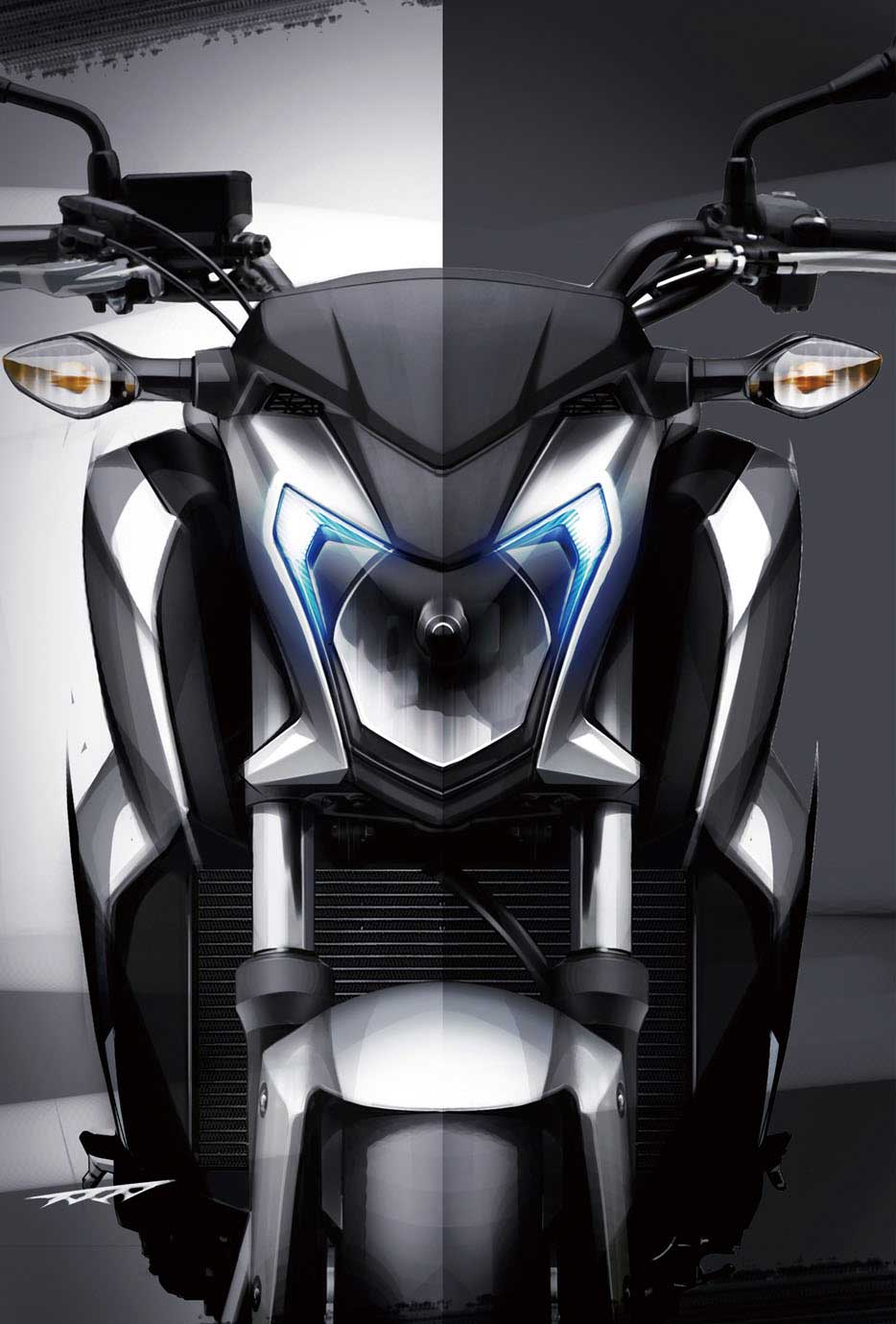
Front design sketch
The newly designed inline-four engine expressed functional beauty to the fullest by eliminating unnecessary elements. From the compact, intricately formed area around the cylinder head to the engine as a whole, every aspect of its appearance was shaped by function.
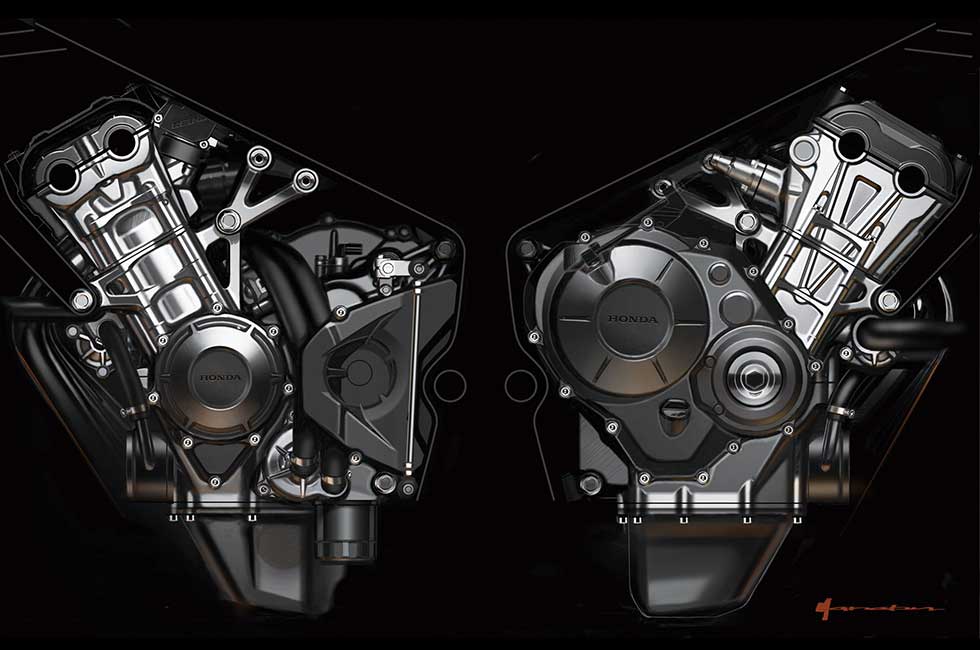
Engine design sketch
In 2017, the CB650F was further refined with revamped styling, increased maximum engine output and other updates.
A new high-intensity LED headlight gave the motorcycle a sharper, more advanced appearance, while redesigned shrouds were shaped to actively direct air into the intake ducts while riding.
Revisions to the intake and exhaust systems increased maximum engine output by 5kW (7PS) over the previous model while also improving torque characteristics in the low and midrange rpm range.
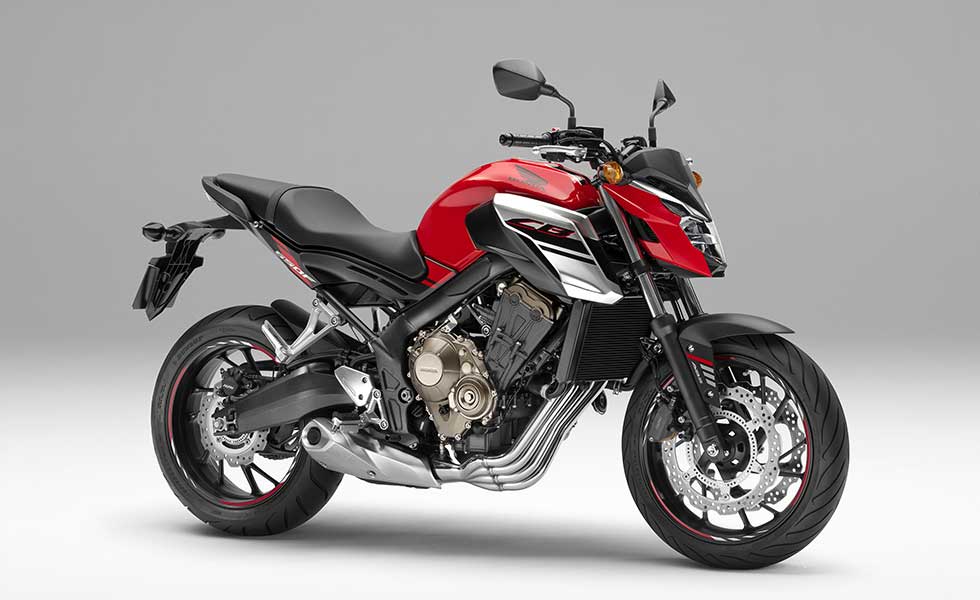
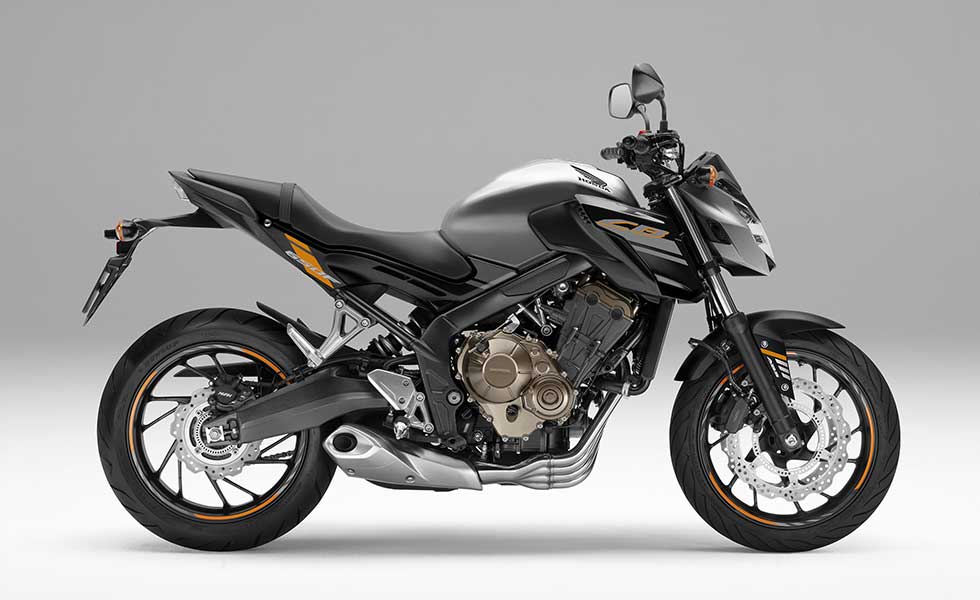
CB650F (Japan specification), launched in April 2017